Tourism

Within the Land of the Seven Citadels: Sighișoara

Within the Land of the Seven Citadels

Known as Ardeal in Romanian, Erdély in Hungarian, and Siebenbürgen in German, Transylvania as we know it today has had many names in its history; Romanians, Saxons, Magyars and Szeklers have all helped to create this region.You can thus find traces of these peoples and civilisations throughout the fortifications all around Transylvania. Literally meaning ‘country beyond the forest’, Transylvania is surrounded by the Carpathians and is considered one of the wildest landscapes in Romania.

In 1191 or 1198, Saxon settlers were sent by King Géza II of Hungary to defend the Carpathian passes. They built 7 legendary citadels: Brașov, Bistrita, Cluj (replaced by Sebes), Medias, Orastie (replaced by Reghin), Sibiu and Sighișoara. The region was soon named Siebenbűrgen in honour of these 7 citadels.

Sighişoara

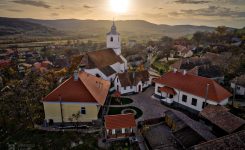
During the 12th century, German craftsmen and merchants were invited to Transylvania by the King of Hungary to settle and defend the frontier of his realm. By 1337 Sighișoara had become a royal centre for the kings, who granted the settlement urban status in 1367 as the ‘Civitas de Segusvar’. Sighișoara, the only citadel still inhabited in south-eastern Europe, entered UNESCO’s World Heritage List in 1999. Today, the city is separated into two parts, a modern part crossed by the Târnava Mare river and the older side populated by many souvenir shops. There are two ways to reach the citadel: via a little train or on foot. If you choose to go on foot, you will come across the main symbol of the city: the clock tower. You can climb to the top of the tower, visit the museum and admire the beautiful view of the city for a few lei.

Formerly called Turnul Sfatului (Council Tower), this tower has watched over the entrance to the citadel since the 13th-14th centuries. It protected the main entrance, homed city council meetings and guarded the archives and treasures of Sighișoara. Since 1899, the city's history museum has been located there. After a terrible fire in April 1676, the tower was rebuilt by Austrian architects Veit Gruber from Tyrol and Filip Bonge from Salzburg as well as a carpenter named Valentin.

In 1648, Johann Kirchel de Königsberg installed a mechanism composed of seven linden wood figurines, each representing the seven days of the week in the form of Diana, Mars, Mercury, Jupiter, Venus, Saturn and the Sun. The platform with the figurines turns every 24 hours at midnight.
  • Text Hover
  • Text Hover
  • Text Hover
The figurines:
Sunday:
    •  Female character with a crown of golden rays, representing the sun.
    •  The position of her hand suggests the power to raise or lower the treasures of the earth. 
      • Metal = Gold
Monday: 
    • Diane, goddess of the moon and hunting.
      •  Metal = Silver
Tuesday: 
    • March, god of war. 
      • Metal = Iron
Wednesday: 
    • Mercury, God of commerce and messenger of the Gods.
      • Metal = Mercury
 Thursday: 
    • Jupiter, God of lightning; his planet is the largest in the solar system. 
      • Metal = Tin
Friday: 
    • Venus, goddess of beauty and love. 
      • Metal = Copper
 Saturday: 
    • Saturn, god of fertility, agriculture and time. 
      • Metal = Lead
After passing the tower, you will reach the central square of the city where the noble and wealthy patricians lived. This is where the trials and executions took place at the ‘Pole of Infamy’. Here, they tied up criminals, hanging a big stone of several kilograms around their necks. Mainly inhabited by craftsmen and wealthy merchants and led by guilds, the city had an important strategic and commercial role for several centuries. These guilds had an obligation to financially support the church and the city's defense system while the wealthiest corporations had to maintain part of the surrounding wall and thus, Sighișoara prospered. 
Each tower was named after the guild that looked after its neighbourhood. They include: 

                                  1. Turnul Tăbăcarilor  - Tanner's Tower
                                  2. Turnul Cositorarilor  - Tinsmith's Tower
                                  3. Turnul Frânghierilor  - Ropemaker's Tower
                                  4. Turnul Măcelarilor  - Butcher's Tower
                                  5. Turnul Cojocarilor (Blănarilor) - Furrier's Tower
                                  6. Turnul Croitorilor  - Tailor's Tower
                                  7. Turnul Cizmarilor - Bootmaker's Tower
                                  8. Turnul Fierarilor - Blacksmith's Tower
Additionally, in the citadel you can still find old houses which have remained well preserved. For example: Casa Veneţiană (The Venetian House), Casa Duldner, Casa Wagner, and Casa cu Cerb (The Deer House). The most famous one is Casa Vlad Dracul, or the house of Vlad the Impaler. Formerly an official residence of the mayor and the royal court of the citadel, it housed Vlad Dracul, the ruler of Wallachia, and his pregnant wife during the Turkish invasion of Wallachia. Vlad the Impaler was born in this house in 1431 and lived there until the age of four. Today, Vlad Dracul's old abode houses a medieval-style restaurant on the ground floor and a small weapons museum on the first floor.
  • Text Hover
  • Text Hover
  • Text Hover
As you walk through the citadel, you will come across The Stairs of the Schoolchildren (‘Scara Şcolarilor’). Similar to a tunnel, it was built in 1654 to make it easier for students to access school at the top of the hill during winter. Imagine climbing 175 steps everyday to go to class! At the top of the hill lies the Biserica din Deal, a church famous for its ancient crypt. It now houses a museum of Saxon art.

Advice:
  • Free parking after 6 PM;
  • Don’t go on a Sunday if you want to visit the shops in the modern part of the city;
  • There is a phone app (which you have to pay for) in the form of a treasure hunt which aids you in exploring the the citadel and learning about the history of the city; 
    • Sighisoara: Medieval Citadel City Exploration Game and Tour       
  • The Dracula Investigation, not far from the Stairs of the Schoolchildren, invites you to learn more about the story of Vlad Tepes, who inspired the character of Dracula with the help of shadow games, videos and stories.
  • Text Hover
If this story sparked your interest towards finding out more about Rural Transylvania and possible ways to experience it, you are welcome to contact us at:
Youth Association from Transylvania - office.ata@gmail.com
Farmers Association from the Cristuru Secuiesc Area - office.aacs@gmail.com

Author


Avatar